In contemporary times – an era in which children grow up amidst diversity, migration, and digital realities – education and upbringing can no longer suffice with universal rules and standardised approaches. The empowerment of children and young people, strengthening their rights, competencies, and sense of community, ought to serve as the foundation for all those engaged in education and youth care. During the International Week of The Hague University of Applied Sciences’ Pedagogy programme, I had the privilege of delivering a keynote address entitled Empowering Children: Connecting Rights, Communities, and Competencies. The core of my argument was: true empowerment begins with recognising differences, not ignoring them.
Unequal treatment for equal opportunities
René Diekstra’s Constitution of Upbringing expresses this powerfully: children (and youth) have the right to unequal treatment in education and upbringing. Every child develops within a unique ecology of family, community, and culture. Taking these ecological contexts seriously demands working from models such as Bronfenbrenner’s ecological theory of development and Diekstra’s Triple-O model, in which education [Onderwijs], parents [Ouders], and the broader environment [Omgeving] are interconnected.
Empowerment, therefore, does not imply treating all children equally, but rather embracing differentiated approaches. It requires the careful tailoring of guidance to the capacities, needs, and talents of each individual child.
The hybrid identity of young people
In super-diverse cities such as The Hague (The Netherlands), but equally elsewhere in the world, young people live across multiple social worlds simultaneously: home, the street, and school. The insights of Iliass El Hadioui are particularly relevant here: young people continuously navigate between these environments, developing hybrid identities in the process. For professionals, this means that a one-size-fits-all expectation model is no longer sufficient. We must engage in pedagogical flexibility without losing sight of our core values.
Pedagogical flexibility requires conscious action: how do we adapt our approach without becoming inconsistent? How do we create space for difference without abandoning the structure that young people fundamentally need? Empowerment thus means offering both freedom and boundaries; it is not a matter of either/or, but rather both/and.
Trust as a key element
A vital aspect of this approach is the building of trust. Trust emerges when credibility, reliability, and intimacy are present, and it is undermined by egocentrism. Within educational and caregiving contexts, this means that professionals must not only demonstrate expertise but must also forge genuine connections, subordinating their own interests to those of the children and young people they serve.
Whether in a mentor-pupil conversation, a meeting with parents, or a daily classroom interaction, each situation demands small, deliberate acts that clearly place the child at the centre. Not the system, nor the ego of the professional.
International competencies: local upbringing, global impact
Empowering children does not end with fostering individual growth. In a globalised world, children must also develop international competencies: intercultural sensitivity, linguistic proficiency, global engagement, and subject knowledge from an international perspective. These competencies are not optional; they are essential for enabling children to act as engaged global citizens.
Schools and educational institutions must therefore embed internationalisation and diversity structurally, not merely as isolated projects, but as integral components of both curriculum and institutional culture. World-centred education, as Gert Biesta terms it, is more than an aspiration—it is a necessary preparation for the future.
Empowering children also requires a systemic approach, in which education, parents, community organisations, and other stakeholders work collaboratively. As El Hadioui argues, coherence must be established between the various spheres in which young people operate. Only then can they feel safe, connected, and motivated. Schools cannot be viewed in isolation from their social environments; education is inextricably linked to participation in society.
Conclusion: A shared responsibility
Empowering children is not a passing trend, but a mission requiring courage, professionalism, and cooperation. It demands a radically child-centred approach in which rights, communities, and competencies are central. It requires educational and caregiving practices where tailored support is the norm, trust is the foundation, and internationalisation is the horizon.
As professionals in education and youth care, we bear the responsibility for initiating this shift—not only for the child who sits before us today, but for the world that will be shaped by them tomorrow.
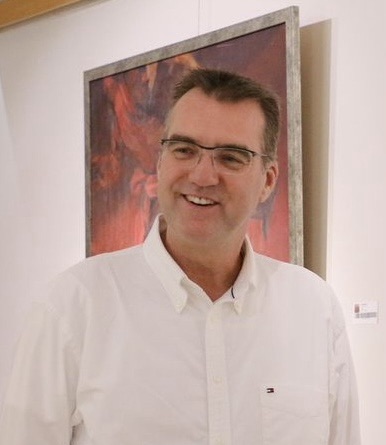
Michel Hogenes, April 2025
The Hague University of Applied Sciences
Categories: Arts Education, Debate, News
 ETEN Journal
Leave a comment