As the academic year draws to an end, the prospect of summer offers a much-needed break. I find myself thinking about what has been achieved in classrooms over the past months, but also on how we could do thing differently. The summer break offers more than just rest, it provides us – educational professionals – an essential moment to reflect and to focus on what truly matters. In doing so, I want come back to a fundamental question: What does an inclusive classroom look like for neurodivergent learners?
Despite progress in accessibility and differentiated education, true inclusion in school settings remains elusive for many students. Neurodivergent children, children with autism, ADHD, dyslexia, sensory sensitivity and other profiles, find themselves navigating through learning environments that are structured around neurotypical norms. Traditionally, classrooms can be overwhelming regarding their sensory demands, rigid in their expectations and narrow in their definitions of success.
And yet, when I observe children being engaged in music, theatre, dance, or visual arts, I often see something very different. I see freedom, engagement and belonging.
From access to expression
In a previous column, I argued that true inclusion is not only about accessibility, but also about belonging. Neurodivergent learners need more than permission to be present. They need environments that not only accept their ways of thinking, feeling and expressing, but also celebrate these ways. Arts education offers this possibility. Within a musical ensemble, a choral or dance rehearsal, or an art studio, children are invited to explore, to connect, and to express themselves in ways that do beyond the constraints of language and standardised tests.
The arts have a way of levelling every child’s possibility. In a theatre improvisation, verbal fluency is not more important than the language of the body, or even presence. In music, a sense of rhythm, or sensitivity to specific tones may shine while spelling tests may falter. In visual arts, the ability to perceive and interpret can outshine the capacity to decode texts. Neurodivergent children can struggle with traditional forms of education while they find their strengths being magnified in artistic domains.
Sensory, social, and symbolic inclusion
It is not a coincidence that so many successful arts programmes are purposely inclusive of neurodiversity. The structure of these activities often aligns with the strengths of neurodivergent learners. Predictable routines combined with explorations that are open-ended. Collaborative work that respects autonomy and multisensory engagement that stimulates diverse modalities of understanding.
Think, for example, of a music class that starts with a steady beat on a drum, offering sensory grounding, before moving into a group improvisation. Or a visual arts lesson that introduces new materials, such as clay, collage and watercolour, as a medium for symbolic storytelling. These moments are not just “creative breaks”. They are essential pedagogical spaces in which children can experience competence, connection, and joy.
Especially theatre offers a unique rehearsal room for life. Through role play, neurodivergent learners can explore social scripts, emotional nuances and perspective-taking in a safe and supporting environment. In contrary to direct instruction in social skills, theatre offers an embodied, affective way of learning. Learning is not about memorising how to behave, but about trying on experiences, identities and responses. Playful and without judgement.
Towards a radically inclusive classroom
Arts education does more than accommodate neurodivergent learners. It redefines criteria by which participation and success are measured. In this sense, it invites us to rethink our broader pedagogical culture. If we want our classrooms to be really inclusive, we must create space for multiple ways of knowing and expressing. We need to move from uniformity to plurality, from correction to connection.
The summer months do not only offer time to rest. They also offer time to dream. What if our classrooms, come September, would look more like ateliers? What if every child, regardless of their neurotype, would daily encounter opportunities to express itself in an artistic way? What if belonging was measured not by how well children conform, but by how freely they can contribute.
An invitation
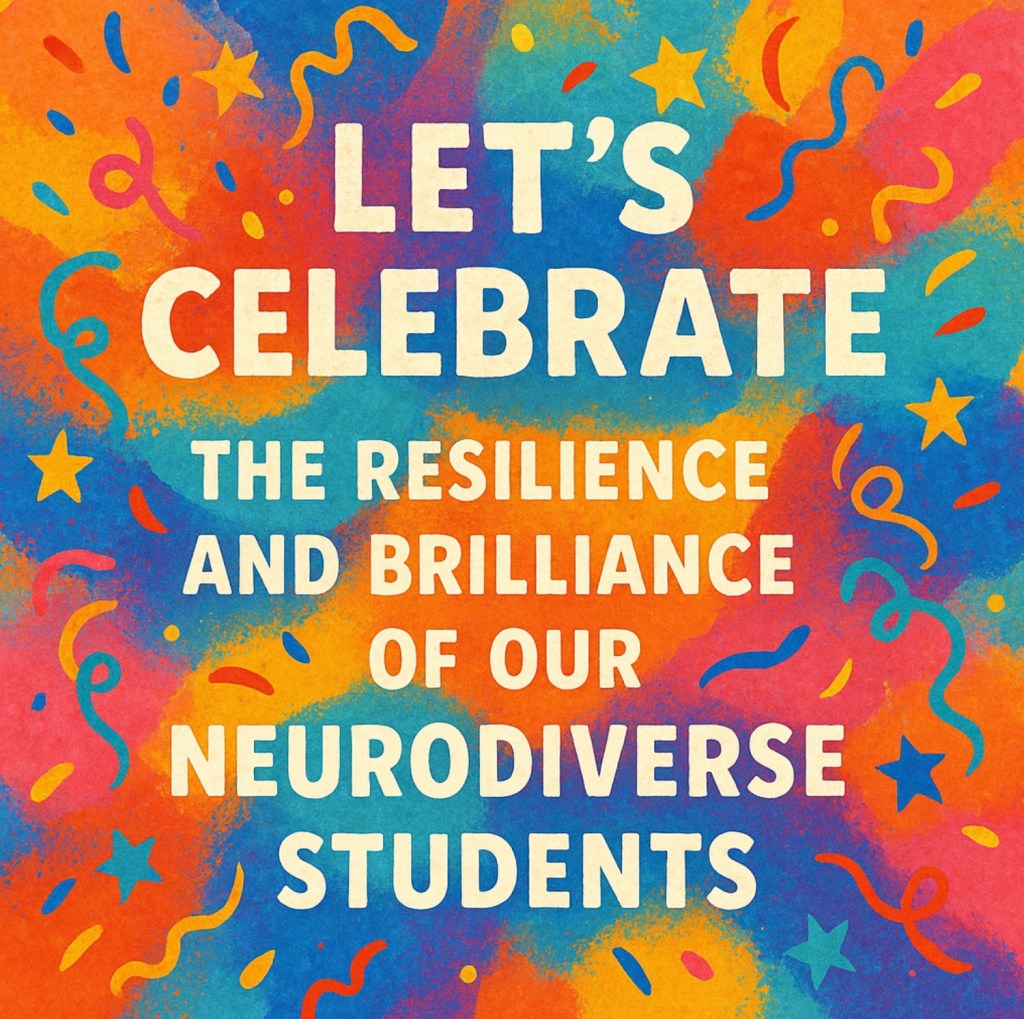
As we close the door on another academic year, I offer this reflection as both a celebration and a challenge. Let’s celebrate the resilience and brilliance of our neurodiverse students, and the transformative power of the arts in making their voices heard. But let us also challenge ourselves as teachers, lecturers, programme managers, and policy makers, to ensure that these artistic spaces won’t remain exceptions. They should be the foundation of inclusive education.
I wish you all a nice summer with lots of rest, inspiration and the conviction that we can build something better this coming September.
Michel Hogenes
July 2025
The Hague University of Applied Sciences
Categories: Debate, Invitations
 ETEN Journal
Leave a comment