What an informative symposium this was! Our TIG consisted of a diverse group of people, from different countries. We immediately felt that we all share the same values, in our education.
Day 1
Wednesday we met for the official opening, the ice was immediately broken! In the evening we went for a nice dinner with a large group: at the table it was immediately noticeable that we had so many interesting topics that we shared, even if we did not all have the same background. Some colleagues are diehard outdoor people, others are trying to find a way to make subjects like physics or other sciences real-life experiences, and still others like to pass on their views on lifelong movement. That promises to be an interesting day tomorrow!

In the image above, you can read in advance which topics were covered. If you want to know more, keep an eye on this ETEN journal, we will post presentations and pictures!
Day 2
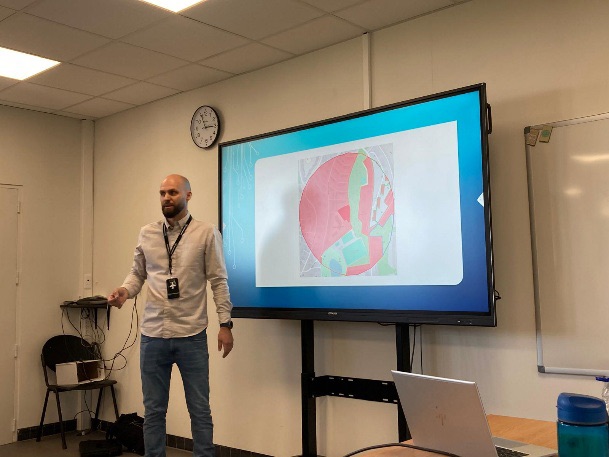
Hans Petter- Local environment and physical active play.
Where did you like to play when you were little? That was Hans-Petter’s starting question to clarify his research question. because good habits are installed at an early age, he investigated how “good” the kindergarten environment is. Among other things, he looked at how many square meters of green space were present, whether a buffer zone was present, speed limit on the track nearby, are the zones manmade or not….
It won’t surprise you, but kindergartens located more in urbanized areas have less green space than more remote childcare facilities. The largest spaces were also often more suitable. But, just because there is a lot of potential doesn’t mean they are used efficiently. Many teachers or supervisors do not know how to use that space optimally. Step 1 is therefore to recognize the spaces and their opportunities. to then in step 2 help teachers explore. We also need to draw their attention to the quality of the activities you do in those green spaces. Sometimes you have to be creative and inventive to do a lot in a short time.
Mats Johnsson- Happy Feet
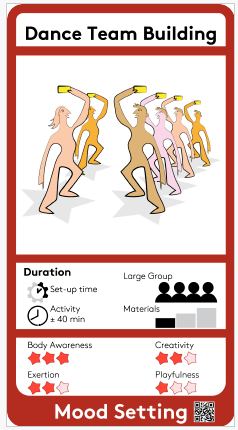
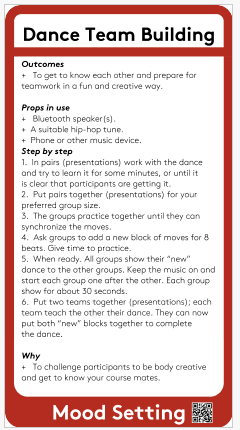
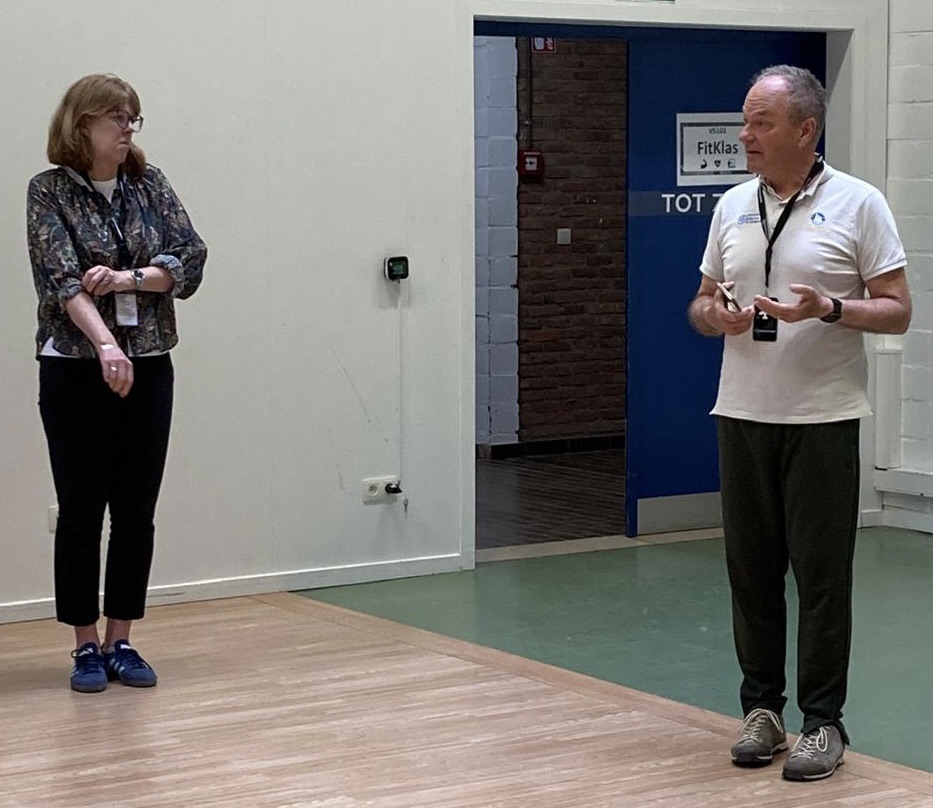
Do you point out that you can use dance to create a dynamic within a group? When you don’t know each other yet, and as a facilitator you provide a safe learning environment, you find that your children/students bring each other into the story. provide simple movements that everyone can participate in. Mats showed us a few basic steps, creating a short dance structure. Afterwards, we were immediately divided into groups and allowed to add or omit movements. so each group made its own thing. Nice to see was how within group you consider each other. By watching and talking, you sense who feels comfortable with which movement.
To be continued!
Categories: 2025 PXL Hasselt, Movement/Play/Health/Outdoor, TIGs
 ETEN Journal
Leave a comment