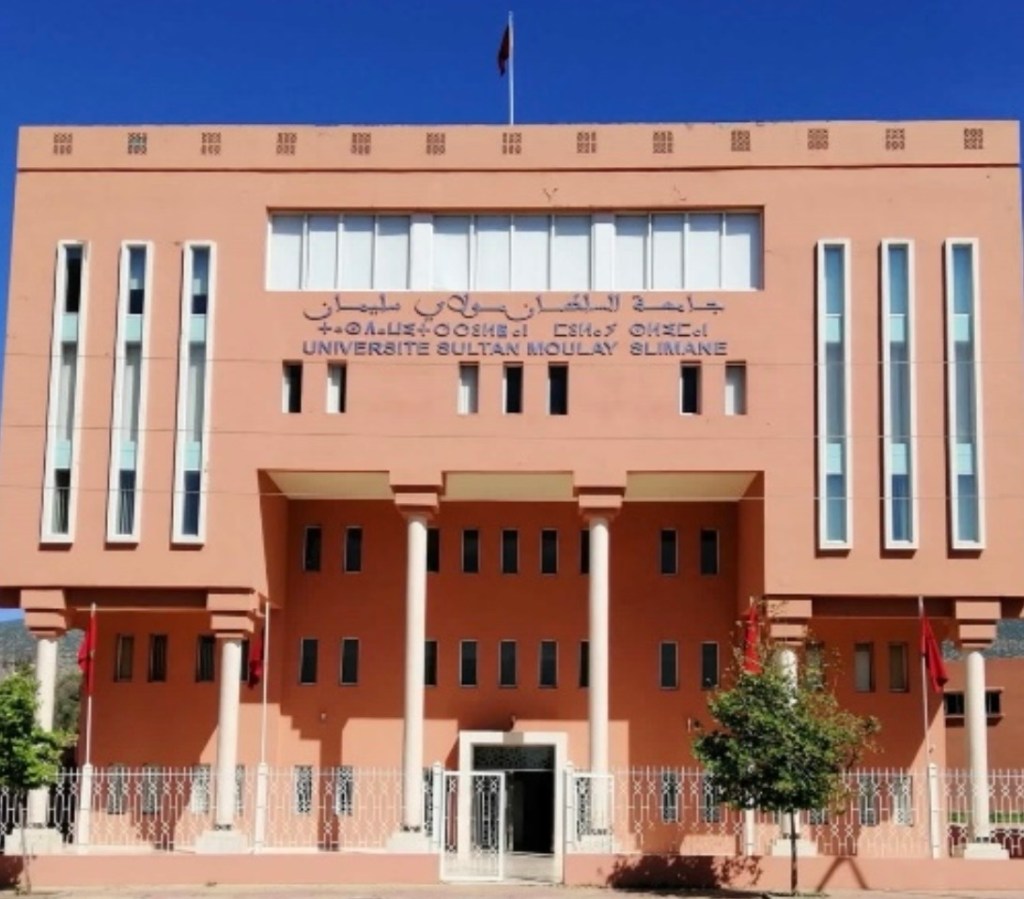
This week, my colleague Nora Daoud and I find ourselves in Beni Mellal, Morocco. It is my first visit to this country, and from the moment we arrived, it became clear to me that this is more than a professional trip. It is a lived experience of internationalisation. One that brings together people, perspectives, and educational practices.
Over the past few days, we had the opportunity to meet an inspiring group of colleagues at the Sultan Moulay Slimane University. Our conversations were characterised by openness, (intellectual) curiosity, and a shared commitment to education as a driver for social development. Despite differences in social and educational contexts, we quickly found a common language around key themes such as inclusion, equity, and the role of education in addressing societal challenges.
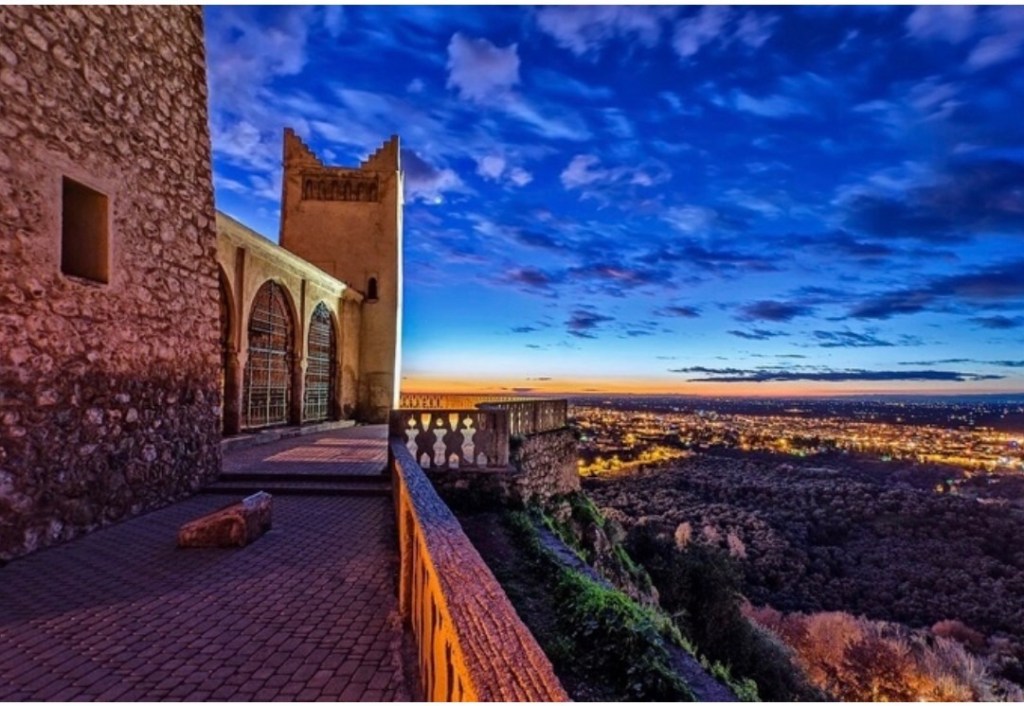
These encounters directly reflect the ambitions formulated for our Erasmus+ KA171 project. The exchange between the Faculty of Social Work and Education at The Hague University of Applied Sciences (THUAS) and Sultan Moulay Slimane University is not an activity on its own. It is part of a broader strategic vision: connecting cultures through transformative education and fostering inclusive, global learning environments. Our project explicitly aims to equip students and staff with intercultural competencies, but also to integrate international perspectives into curricula, and to contribute to the development of world citizenship.
Today, Nora and I delivered a lecture to approximately sixty students, focusing on internationalisation, diversity, inclusion, and children’s rights. What stood out was not only the students’ engagement, but also how naturally our KA171 objectives translated into practice. Students reflected on their own social and cultural contexts, engaged with concepts such as superdiversity and inclusion, and explored how these ideas relate to their future roles as educators and social professionals. This is precisely what our project envisions: experiential learning that connects theory, practice, and context.
The KA171 framework emphasises that mobility is not an end in itself. It is a means to foster educational transformation. In Beni Mellal, this becomes tangible. The exchange programme is designed to go beyond short-term visits. It includes student mobility through international minors, staff exchanges, joint curriculum development, and opportunities for collaborative research. By embedding these activities within both institutions’ internationalisation strategies, the project contributes to sustainable capacity building.
An important aspect of the project is its focus on reciprocity. Too often, internationalisation risks becoming a one-directional process. Our partnership deliberately challenges that notion. Moroccan students and staff bring invaluable perspectives on multilingualism, cultural diversity, and social cohesion, while Dutch participants contribute experiences with inclusive education and student support systems.
Tomorrow, we will meet with students who are preparing to participate in international minors in The Hague. This upcoming mobility is also an outcome of the KA171 project plan. For these students, it is an opportunity to engage with different pedagogical approaches, to develop intercultural sensitivity, and to position themselves as professionals in a globalised world. At the same time, it challenges us as lecturers and professors to ensure that such experiences are inclusive and meaningful for all participants.
What becomes increasingly evident during our visit at Beni Mellal is that internationalisation, diversity, and inclusion cannot be treated as separate agendas. The KA171 project explicitly connects these dimensions. Internationalisation brings diversity into educational contexts, but it is inclusion that determines whether this diversity leads to meaningful participation and learning. This requires deliberate pedagogical and organisational choices. Both in The Hague and in Beni Mellal.
I would like to conclude by expressing my sincere gratitude to everyone who made this visit so valuable. My thanks go to the students of the Sultan Moulay Slimane University for their active participation and openness. To the international coordinators Mr. Nabil Boukhnief and Mr. Sami El Abdioui for their excellent organisation and warm hospitality, and to the professors Prof. Yousra Kadi, Prof. Reitha Ben Rochd, Prof. Nadif Bendaoud, Prof. Mohammed Khatib, Prof. Mustapha Zanzoun, and Prof. Mohammed Alaoui Ismaili for their inspiring contributions to the programme. Encounters like these remind us that education is about bridging cultures, through dialogue, collaboration, and shared commitment to a more inclusive world.
Michel Hogenes, April 2026
The Hague University of Applied Sciences
Read the full story:
Categories: Exchanges, Internationalisation
 ETEN Journal
Leave a comment